Showing posts with label Research. Show all posts

Friday, 23 October 2015

Concept Development - Production Logo Research and Ideas

These production company logos are ones that have been used in other romance films that we have already researched. Because we want to make sure our own production logo is one that looks realistic and as professional as possible, as well as making sure it's one that will be used for our genre of film, I decided to research these company logos to get some ideas.


By researching these production company logos, I discovered that the company name is included on the logo as well as normally some kind of picture, most often something that is related to the company name. For example this can be seen in the logo for Focus Features where the image is out of focus as well as the 'o' in the name.

Below is the production logo that I made and designed for our trailer.


Monday, 5 October 2015

Narrative of a Trailer

Tsvetan Todorov
Believed stories start in a state of equilibrium, which is disrupted, setting in motion a chain of events. The resolution of the story is the creation of a new or different equilibrium. He summed the journey up in five stages:
  1. Equilibrium
  2. Disruption of equilibrium by event or person
  3. Realisation that disruption has occurred
  4. Attempt to repair damage of disruption
  5. Restoration of equilibrium (usually a new equilibrium) 
Examples of films that the theory can be applied to are Titanic, The King's Speech and Die Hard.

The Narrative Structure of Vanity
  1. Equilibrium: Zac and Florence are newly moved in with each other in a society where vanity is not a main focus, people are more concerned with personality. 
  2. Disruption: Someone in the street tells Zac that he is very handsome - something that is forbidden to say. Zac then finds himself in the bathroom when he realises his reflection for the first time, thinking about the comment. 
  3. Realisation: Zac soon becomes obsessed and infatuated with himself - even though he knows it is him in the reflection. His marriage slowly falls apart due to this obsession with a 'new lover'. 
  4. Attempt to repair: Florence takes Zac to the doctors because she is worried about him. The doctor cures him of his infatuation with his reflection.
  5. New equilibrium: Zac is incredibly unhappy now whereas Florence is happy now she's 'fixed' Zac.

Monday, 21 September 2015

Film Poster Codes and Conventions


From these examples, the title is in the bottom third of the poster which makes the eye drawn to this last, therefore making more room for the actual image to be seen. This enables the poster to show the maximum amount of information available making the poster a success. In order for the titles to be noticed, the font of the title is the largest to make it clear that the poster is for that particular poster from far away perhaps, and to also make it stand out.


Actors names are typically shown in posters if the actors are famous to catch your attention to the well-known names featured in the film. This would enable the audience very quickly to judge what type of film the poster is advertising will be as many actors have specific types of film they are in. They are all, above the main title, either just above or at the very top of the poster. In the Suffragette poster for example, Meryl Streep's name appears very close to the main title, almost suggesting that the feature of an incredibly well-known actor is equally important as the films title itself.


Taglines are quite common in posters to give a little snippet of information about the film that the title doesn't. They are also typically above the title, similarly to the actors names. The use of a tagline can also be as a marketing technique if people remember the tagline they would be able to talk about it on social media perhaps.


Film Magazine Front Cover Codes and Conventions


Thursday, 10 September 2015

Trailer Codes and Conventions


I watched around twelve film trailers from all different genres, and I noticed some key codes and conventions appearing in the majority of them.

Production logos was usually the first thing that was seen in the trailer, after the green screen of "approved for appropriate audiences", as seen below.

Macbeth, Concussion, Cinderella and Suffragette all had the production company logos at the beginning of each trailer.


This enables the audience to know straight away who the producers of the film are, and in turn, what to expect from the film. For example, having the Disney logo as one of the first things you see as you watch the trailer, the audience would expect and know that a family friendly film with fairy-tale aspects would be shown. This would also be useful for the trailer itself as having the logos at the beginning wouldn't interrupt the trailer in any way, making the most of the time and enabling the audience to immerse themselves in the trailer in order to get a good idea of what the film is going to be about and if it's for them or not.

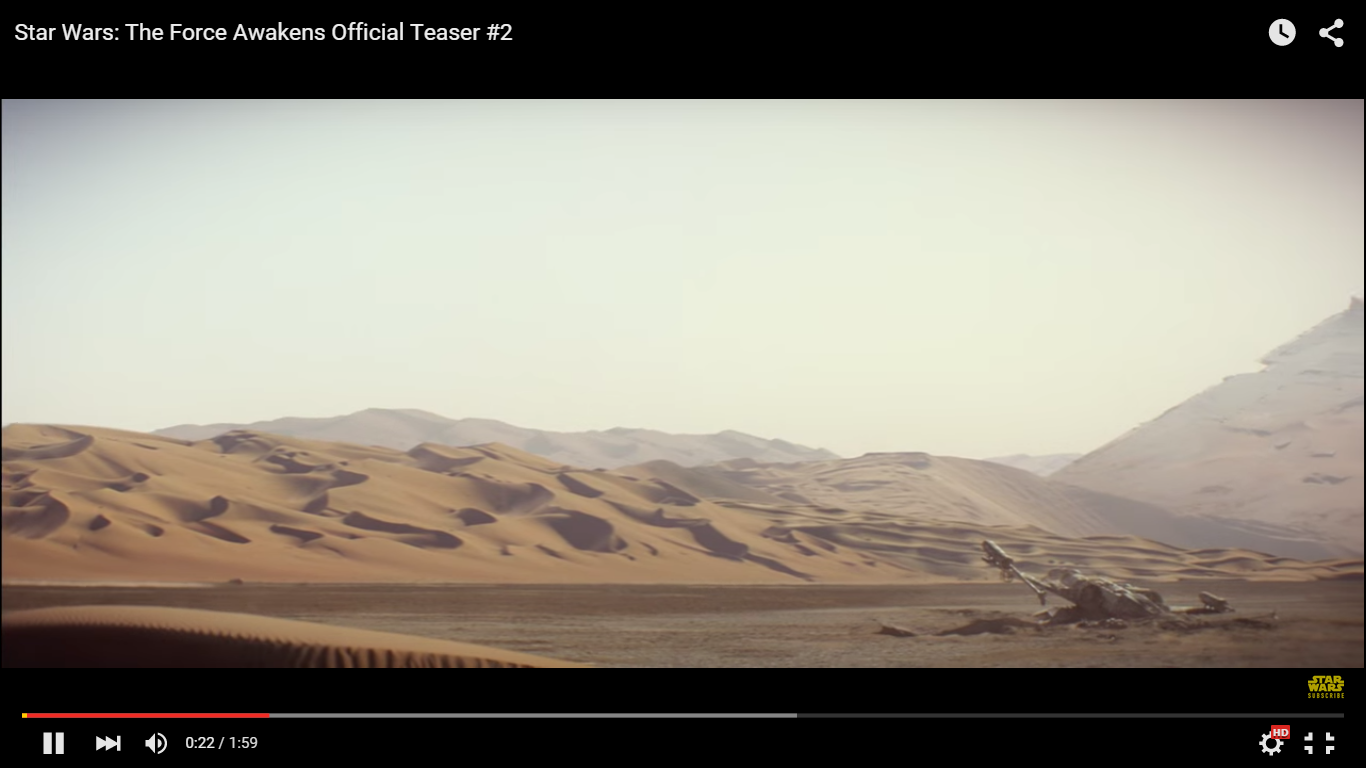
Establishing shots are used in trailers to quickly get the setting across to the audience, without having to specify the exact location in which the film is taken place.

About Ray, Macbeth, Concussion and Star Wars Episode VII all include this feature.

(About Ray included a montage of establishing shots in order to get this across)
Establishing shots enable the audience to be aware of where the film is meant to be set very quickly by, usually, panning the main scene where the film is taking place. This is important for the audience as otherwise they would have no idea where it was set, for example the future, the past etc, and could possibly be confused. Establishing shots create a familiarity with the film before they have even seen the film. 

The release date of the film is on the majority of trailers, unless they are teaser trailers which could include 'coming soon' or 'summer 2016' for example. 


Release dates are important for the audience to know as it makes the film available for them to actually go and watch it. The release date is almost always shown during the middle of the trailer, stating 'this summer' or 'December', following with an actual date. This would create excitement and anticipation for the audience watching the film as they would want to know when the official date of the film is being released so they could go and watch the film. Especially if the trailer is being shown close to the release date, the audience would be excited and perhaps more likely to watch the film as it would be 'fresh' in their minds and therefore easily accessible for them to attend a screening. 

Titles of the film in trailers typically are the last thing on the screen, before the release date. This is to ensure that the audience remember the name of the film, to make them more likely to actually go and see it. Even if they don't go and see it straight away, they could talk about it on social media sites - which the links for these are also seen in the trailer to encourage the audience to interact with the trailer and promote it even further. Titles are a very important feature of the trailer as without it, you'd obviously have no idea what the film was called which would defeat the point of the trailer all together really. 
  
Some other codes and conventions that are included in trailers are shown below.